How often and how long should you train your dog?
One session of ten minutes, and short moments of a few seconds for the rest of the day. Why longer is not better, why you always end on something positive, and when you attach a word to it.
Each piece takes one behaviour and shows what usually sits underneath it. Pick what you are running into and you only see what covers that.
Rest, a place of his own and a day he can follow. As long as that is not in place, almost every exercise stays harder than it needs to be. If something will not work, the answer sits there more often than in the exercise itself.

One session of ten minutes, and short moments of a few seconds for the rest of the day. Why longer is not better, why you always end on something positive, and when you attach a word to it.

Three layers your dog stands on, and one thing you do the whole way through. How you spot which layer is missing, what to do about it, and why skipping a step sets you back instead of forward.
A clicker is not a button that makes your dog listen. It is a marker that says: that was it, and something is coming. How you teach it, when your own voice does the same job, and why you stop once he can do it.
He is not ignoring you, he cannot hear you. Focus, catch and find it: what to use the moment a normal command stops getting through, and how to build them before you need them.
A dog pulls because it works: he puts pressure on the lead and he moves forward. How you turn that around, how you teach him the heel position, and what to do the moment the lead goes tight.
A dog who bites your hands and sleeves is usually not angry but playing, or he is overstimulated and overtired. What you do in the moment, and why saying ouch works exactly the wrong way.

A puppy cannot hold it for long yet, and he does not have to. You are the one looking ahead. How you do that, and which mistake is hardest to undo later.

Sleeping, eating, toilet breaks and playing at fixed moments. House training gets easier from it, and so does rest. Fill in your own times and print the schedule.

An adult dog who pees indoors has usually not forgotten it. Often he never learned it. How you build that up, without ever punishing him.

A dog who refuses the crate rarely has a crate problem. Usually the crate has become the place where something unpleasant happened. How you turn that around, without pushing him into anything.

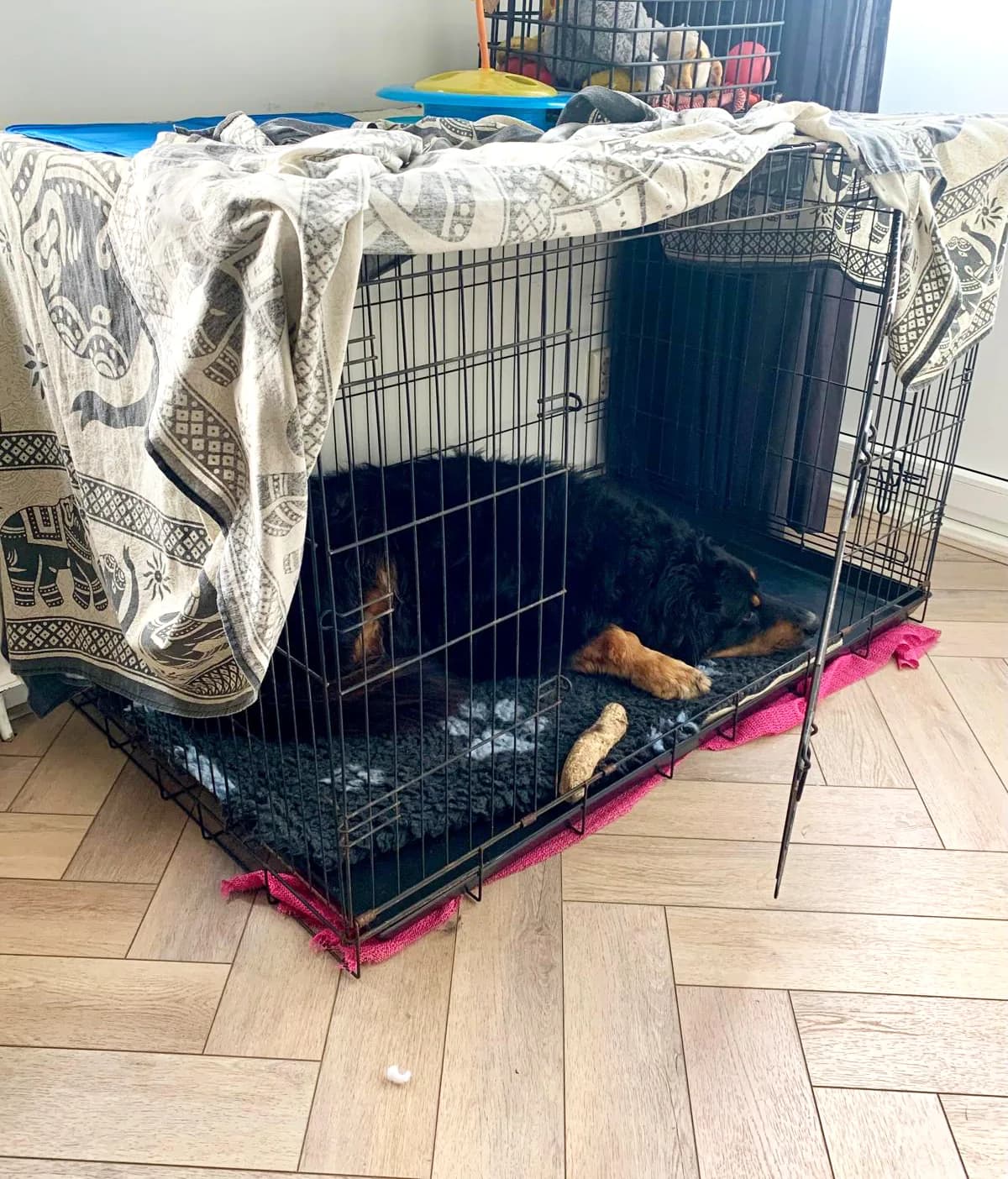
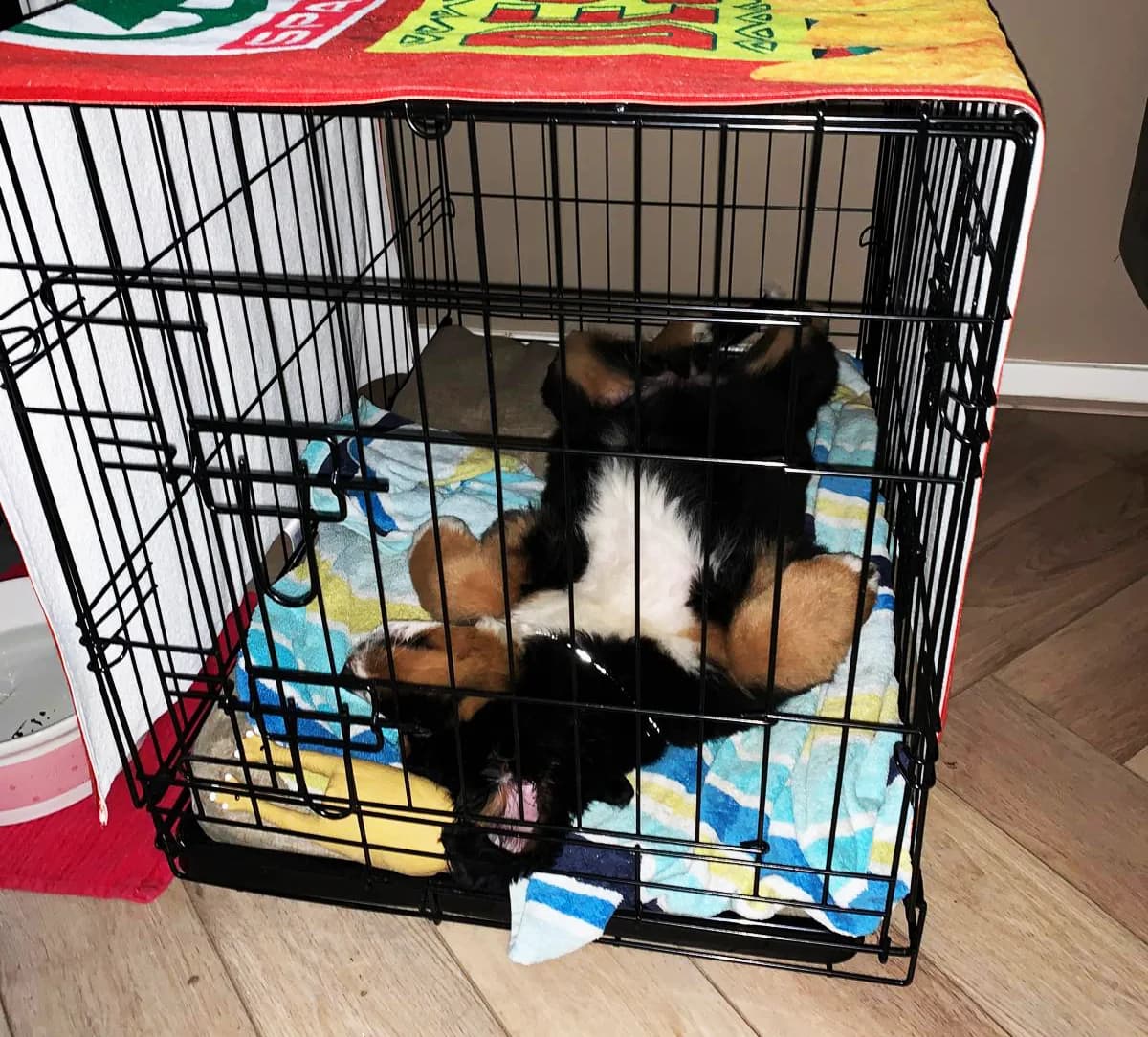
A crate is not a place to put your puppy away, it is where he learns to sleep. How you build that from the first night, what to do when he cries, and why coming out matters as much as going in.